
Edgecombe County Arrest Records and Charges
Edgecombe County arrest records begin on the law-enforcement side. The Edgecombe County Office of the Sheriff is responsible for criminal investigations, traffic offenses, service of civil and criminal process, court security, prisoner transportation, central communications, and operation of the detention center. If a person is booked into local custody, the jail side may have booking and custody details. That is not the same record as the court charge list maintained by the Clerk of Superior Court after a case is filed.
Court charges after arrest are tracked in the criminal case file. The Edgecombe Criminal Division schedules and retains criminal records for felony cases, misdemeanor matters, open traffic violations, missed criminal court dates, criminal bail bonds, bond forfeitures, misdemeanor appeals, and expunction process. For custody and booking details, the related jail information belongs with Edgecombe County inmate records. For pleas, disposition, sentence, and the full criminal case file, use Edgecombe County criminal court records.
The District Attorney for Prosecutorial District 8 represents the State in criminal cases filed in District and Superior Courts. The official District Attorney page for Edgecombe, Nash, and Wilson Counties identifies Jeffrey Marsigli as District Attorney and explains that the office prepares the criminal trial docket and advises law enforcement officers.
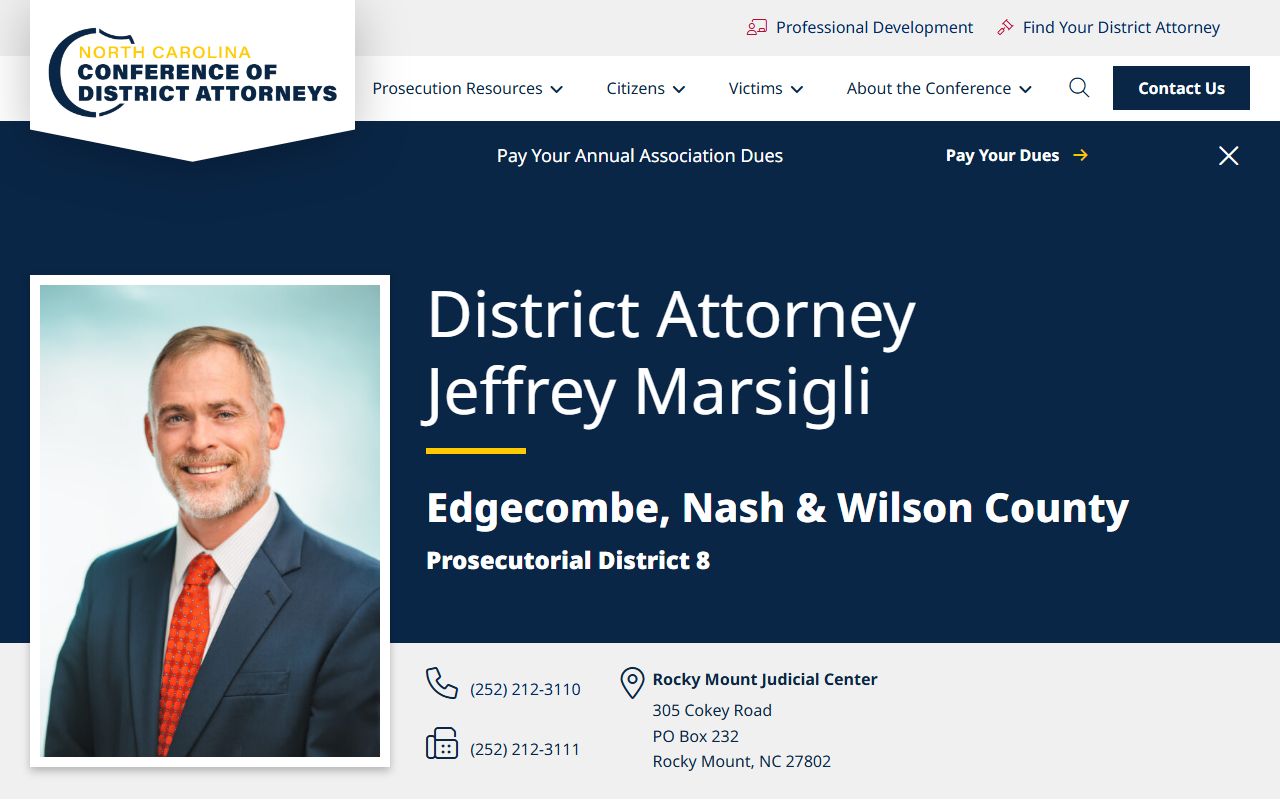
That prosecutor role is the reason an arrest record and the later court charge record can differ. The arrest may start the process, but the court file shows what the State chose to file and pursue.
Search Edgecombe County Court Charges
Charge records are searched through the court channels rather than a county mugshot database. The NC eCourts Portal provides Smart Search for court records and case information, hearing search, payments for eligible matters, and a judgment search tied to the clerk record index. Edgecombe court users can also use public terminals at the clerk's office. NC Courts says criminal case information can be accessed from a public self-service terminal in any clerk's office by defendant name, case number, or victim and witness name.
- Open the NC eCourts Portal and use Smart Search for the court case record.
- Search by defendant name, case number, or record number. Use Edgecombe County as the location filter when the portal offers a county filter.
- Open the case result and read the charge list, case status, hearing entries, bond events, and disposition fields.
- If the online record is unclear, call or visit the Clerk Criminal Division at the courthouse, because paper files and public terminals may provide more context.
- For a name-based Edgecombe criminal record check, use the Clerk's AOC-CR-314 process rather than treating a portal search as a formal background check.
The Edgecombe criminal record check process is narrow. The local clerk page says the record check costs a statutory fee of $25, may be requested in person or by mail, and searches only criminal charges filed in Edgecombe County by name. It is not fingerprint based, so a common name can return more than one person.
The NC Indigent Defense Services Edgecombe County page directs people with appointed-counsel questions to contact the Clerk of Superior Court.
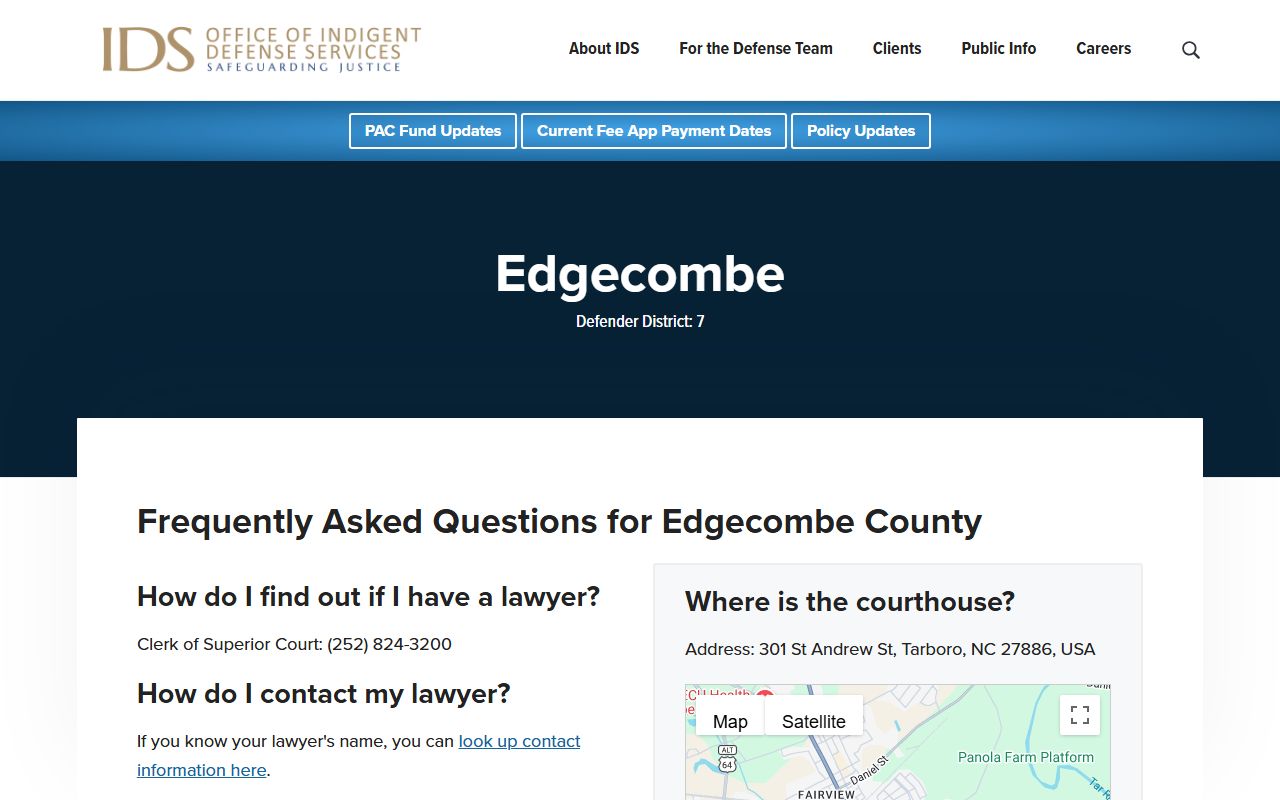
That contact path matters when a charge appears in court records and the defendant needs to know whether counsel has been assigned.
Edgecombe County Charging Documents
A charge record begins with a charging paper. In Edgecombe County, criminal files may include warrants, citations, indictments, criminal summonses, charging documents, bond orders, docket entries, pleas, dismissals, judgments, probation conditions, and sentencing records. A single arrest can result in more than one charge, and each count can move in a different way as the case goes through District Court or Superior Court.
| Charging document | Common use in the record | What to check |
|---|---|---|
| Warrant, citation, or criminal process | May start a misdemeanor, traffic, failure-to-appear, or arrest-related matter. | Look for the alleged offense, statute, issuing officer or judicial official, and court date. |
| Criminal summons or statement of charges | May bring a person into court without the same custody path as a booking event. | Check service entries, first appearance date, and whether the charge was amended. |
| Indictment | Common for felony matters that move into Superior Court. | Compare the indictment count to earlier arrest or District Court entries. |
The Clerk of Superior Court keeps these records as part of the trial-court file. G.S. 7A-109 governs records kept by clerks and supports the judgment index referenced by the NC Portal.
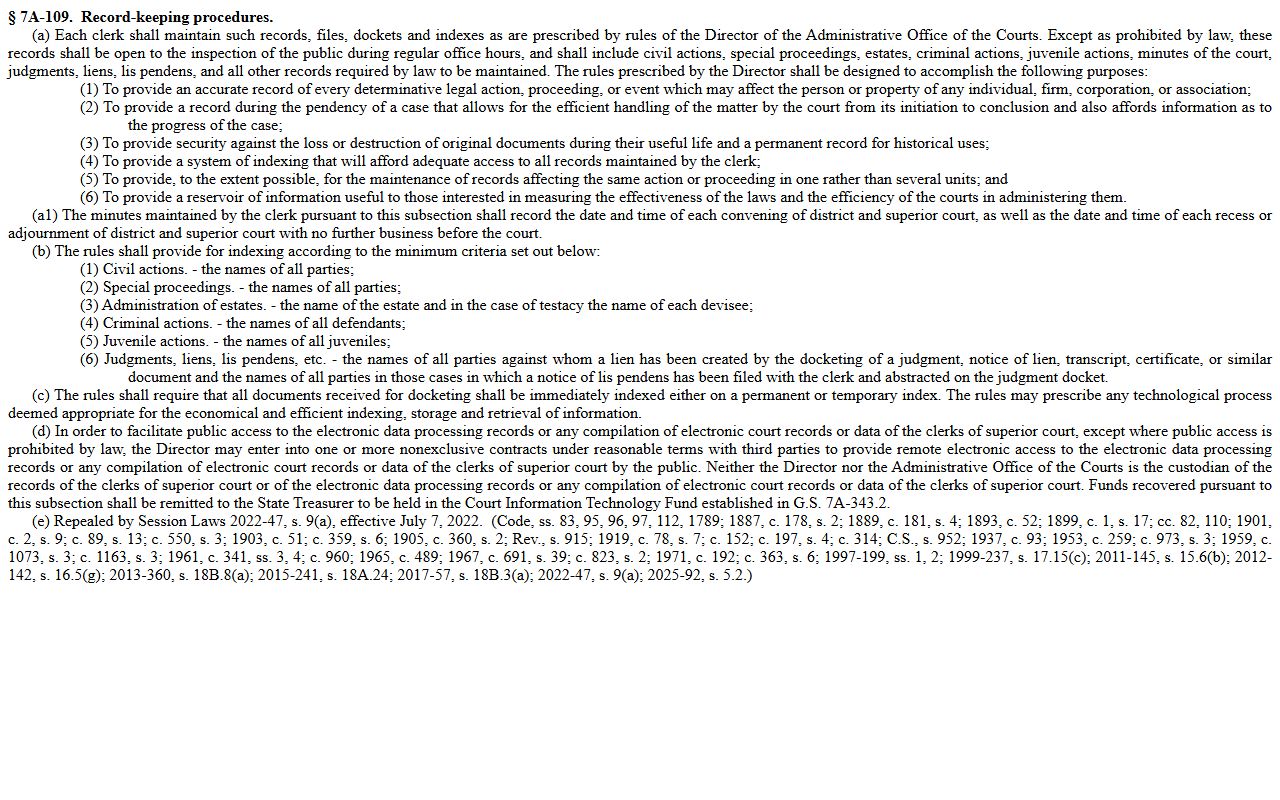
The clerk record statute is relevant because the searchable court charge record is a clerk-maintained case record, not a sheriff booking page.
Note: The county research found no official Edgecombe mugshot or booking-search database to use as a substitute for court charge records.
Edgecombe County Charge Status Terms
Charge status is the key detail in an Edgecombe County court charge search. A charge can be pending at first appearance, amended after review, reduced as part of a plea, dismissed by the court, or resolved by conviction. The word used in the court record matters more than the first charge named at arrest. Court records may also show bond, bond forfeiture, missed court dates, and later hearing entries tied to the same charge.
| Status | What it means in a charge record |
|---|---|
| Pending | The charge is still open, or no final court outcome has been entered in the public record. |
| Amended or reduced | The original accusation changed, often to a different count, level, or statute before final disposition. |
| Dismissed | The court record shows the charge did not result in a conviction on that count. |
| Disposed | The court has entered an outcome, such as plea, verdict, dismissal, or other final action. |
| Expunction pending or granted | Eligible records may be removed from public view if the statutory process is completed and approved. |
The North Carolina Judicial Branch expunction help topic explains that eligibility depends on the charge result, conviction type, age, prior record, waiting period, and the correct petition. Edgecombe's Criminal Division lists expunction process among its criminal responsibilities.
Bond and first-appearance entries can also affect how a charge appears in the record. The Edgecombe Criminal Division handles criminal bail bonds and bond forfeitures, while magistrates are part of the local process for warrants and initial appearances. A person may see an arrest-related charge, a bond condition, and a later hearing entry before any final disposition is entered. That sequence is why the date of the arrest should not be treated as the final date of the court charge record.
Edgecombe Charges Versus Convictions
A charge is an accusation in the court file. A conviction is a final finding or plea of guilt. Edgecombe County arrest records may show why a person entered custody, and court charge records may show what the State filed, but neither point alone proves a conviction. Always read the disposition and sentencing entries before describing the final outcome of a criminal matter.
| Point of comparison | Charge | Conviction |
|---|---|---|
| Stage | Filed after arrest, citation, summons, indictment, or other criminal process. | Entered after a guilty plea, verdict, or other finding of guilt. |
| What it proves | Only that an accusation was filed in court. | That the charge was resolved against the defendant. |
| Where to read it | Charge list, docket entries, charging documents, and hearing records. | Disposition, judgment, sentence, probation, and financial entries. |
| Common access issue | May be amended, dismissed, sealed, or expunged. | May still be eligible for some expunctions under Chapter 15A. |
The NCDAC public records page is useful for state custody or agency records, but it also highlights a boundary: county jail records and county court charge records are not the same as state prison, probation, or parole records.
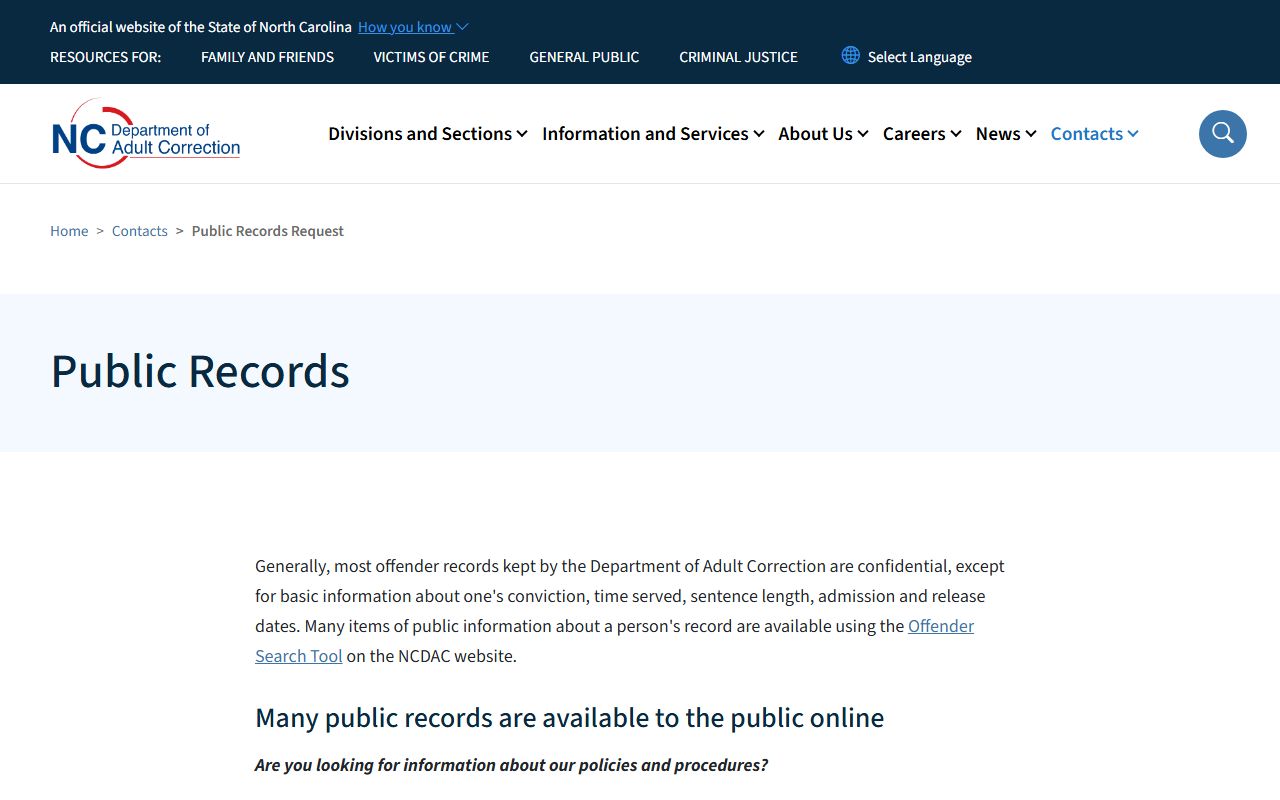
That agency split is important when one case creates a local arrest record, a local court charge record, and later a state correctional record.
Public Access to Edgecombe Charges
North Carolina public-record law gives broad access to public records, but court access still depends on the custodian and the type of file. For court charge records, the Edgecombe Clerk of Superior Court is the local custodian. The NCAOC public records request form is for NCAOC-held administrative records and is not a substitute for asking the clerk for court documents or case files. For sheriff-held arrest, incident, jail, or detention records, request routing starts with the Sheriff's Office or county process.
Useful access channels include the NC eCourts Portal, public self-service terminals in clerk offices, paper files at the clerk's office where the case is located, and the Edgecombe criminal record check process. For older or non-digitized files, do not assume online search is complete. Certified copies and file review should be handled through the clerk division that holds the record.
- Public record
- Material made or received in connection with public business, subject to exceptions.
- Disposition
- The court outcome for a charge, such as dismissal, plea, verdict, or judgment.
- Expunction
- A legal process that can remove eligible criminal records from public access.
Restricted Edgecombe Arrest Records
Not every arrest-related or charge-related record is public. Juvenile delinquency, abuse, neglect, dependency, termination of parental rights, and emancipation matters are handled through juvenile channels and are not ordinary public files. Adoption records, sealed matters, expunged records, victim addresses, protected identifiers, medical information, and active investigative material may be withheld or redacted.
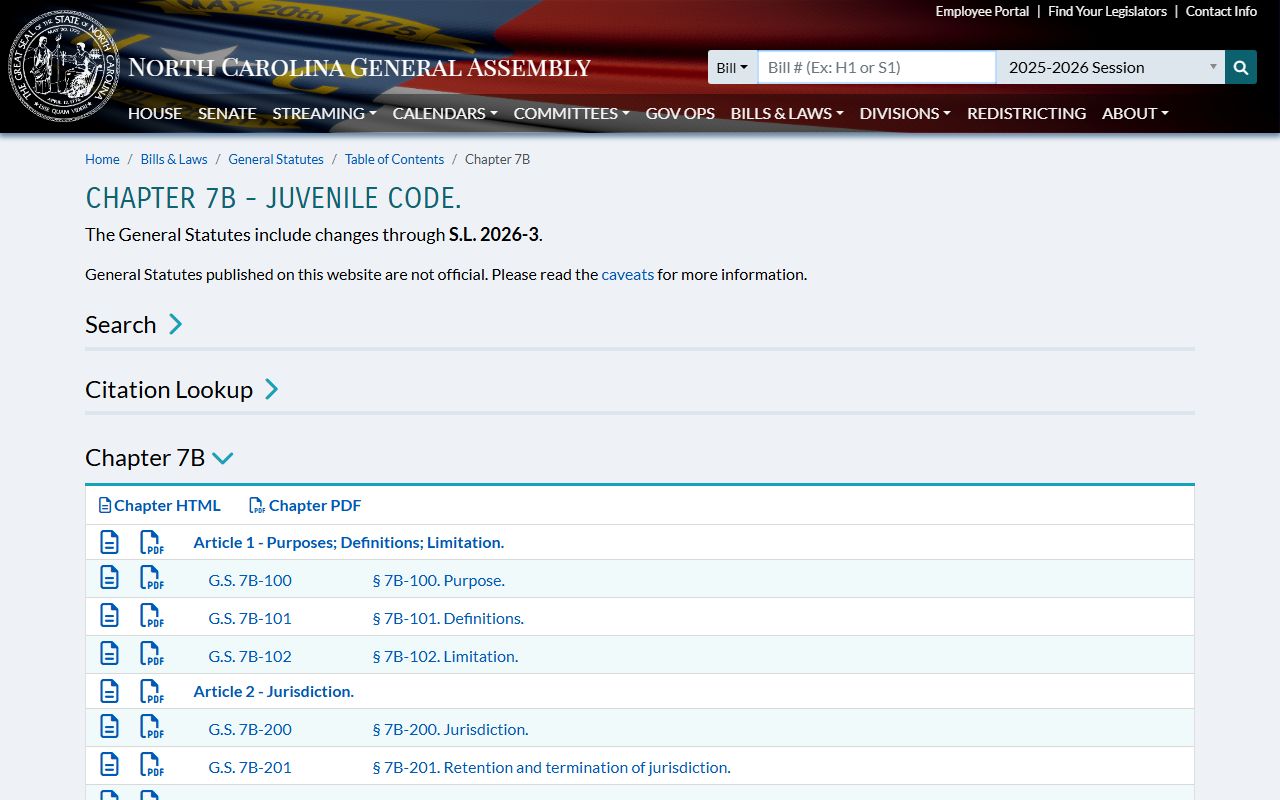
North Carolina's Chapter 7B juvenile code governs juvenile matters and juvenile-record restrictions.
Juvenile restrictions are a major reason a search for Edgecombe County arrest records may not return every event involving a young person.
G.S. 7B-3200 addresses expunction of certain juvenile records.
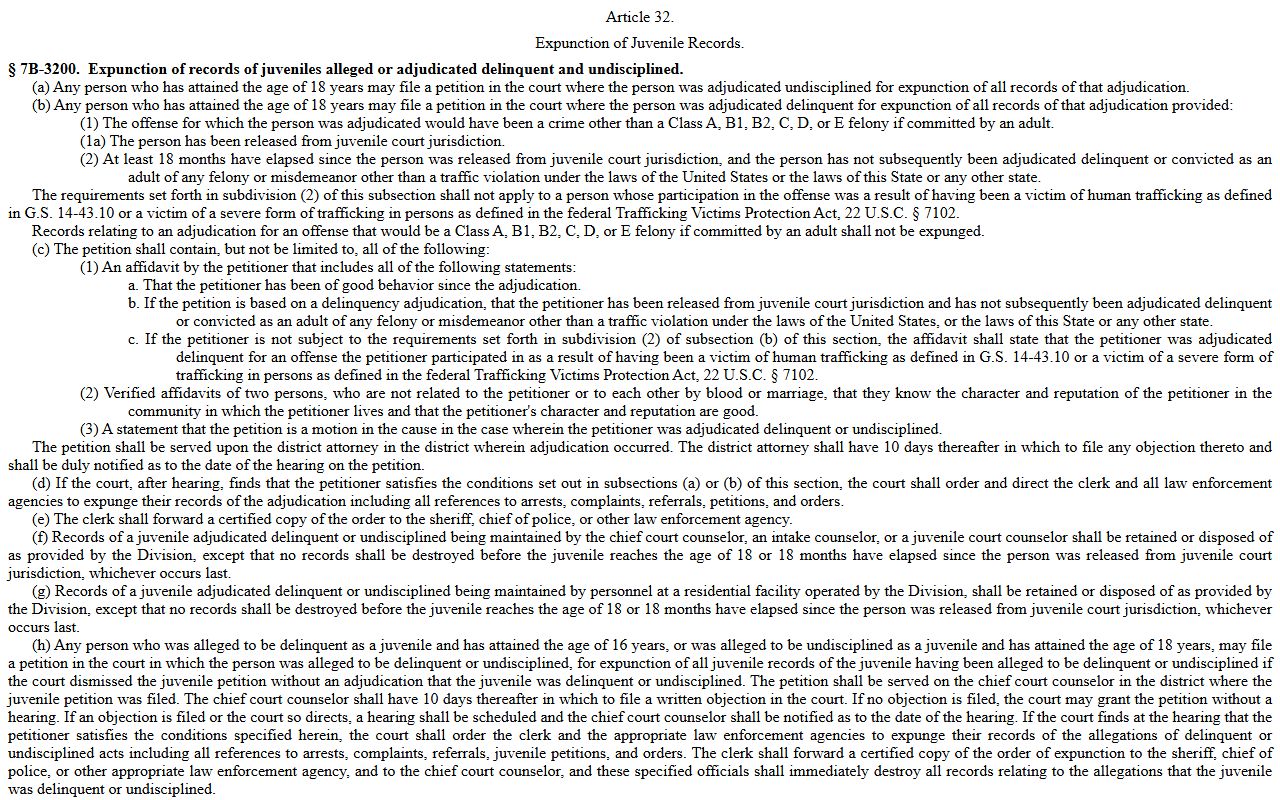
Juvenile expunction rules should be read separately from adult charge expunction rules under Chapter 15A.